
OpenAI has released its latest large language model i-e GPT 4. This model is a large multi-model that can accept both image and text inputs and generate text outputs.
Before knowing about GPT 4, lets have a glance on what is GPT and what GPT stands for. We will also discuss about othet GPT version like GPT 1, GPT 2, GPT 3, etc.
What is GPT Stands for?
GPT stands for “Generative Pre-trained Transformer.” It is a type of language model developed by OpenAI that uses a transformer-based neural network architecture and is trained on large amounts of text data. GPT models are designed to generate human-like text by predicting the likelihood of words or phrases given the preceding context of the text.
What is GPT?
GPT (Generative Pre-trained Transformer) is a type of artificial intelligence language model developed by OpenAI. GPT uses deep neural networks to generate natural language text that is similar to text written by humans. It is trained on large amounts of text data and is designed to predict the likelihood of words or phrases given the preceding context of the text. GPT models have achieved impressive results in tasks such as language translation, question answering, and text summarization. GPT models are used in various applications such as chatbots, language translation, text completion, and text generation.
What is GPT 1?
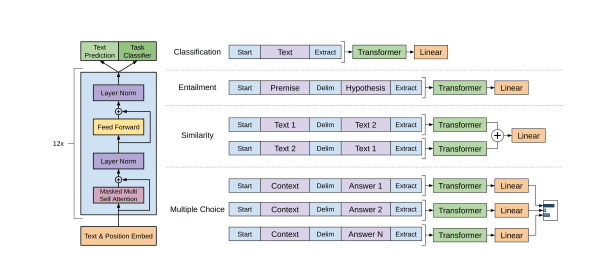
GPT-1 (Generative Pre-trained Transformer 1) was the first version of the GPT language model developed by OpenAI, released in 2018. It was based on the transformer architecture and was trained on a large corpus of text data, consisting of approximately 40 GB of text from various sources such as books, articles, and websites.
GPT-1 had 117 million parameters and was trained using an unsupervised learning approach, where the model was trained to predict the next word in a sequence of text. It was capable of generating coherent text in response to a given prompt and was able to perform various natural language processing tasks such as text completion and question answering.
Although GPT-1 was considered a major breakthrough in natural language processing, it was later surpassed by subsequent versions of the GPT model, including GPT-2 and GPT-3, which had significantly larger parameters and achieved even better performance on various language tasks.
What is GPT 2?
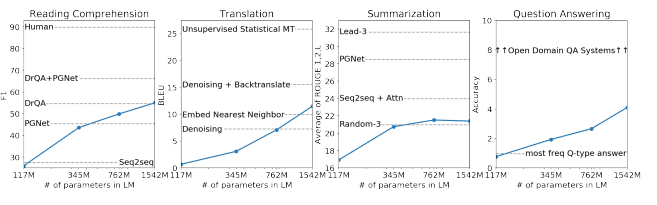
GPT-2 (Generative Pre-trained Transformer 2) is a language model developed by OpenAI, released in 2019. It is a successor to the original GPT-1 model and is significantly larger and more powerful, with 1.5 billion parameters compared to GPT-1’s 117 million parameters.
GPT-2 was trained using a similar approach to GPT-1, where the model was trained on a massive corpus of text data using unsupervised learning to predict the next word in a sequence of text. However, the larger size and more extensive training data of GPT-2 enabled it to generate even more human-like text than its predecessor.
GPT-2 is capable of performing various natural language processing tasks such as language translation, text summarization, and text completion. Its ability to generate highly coherent and natural-sounding text has led to concerns about its potential misuse, such as in the creation of fake news or propaganda.
As a result, OpenAI initially chose not to release the full version of GPT-2 to the public, citing concerns about the model’s potential misuse. However, they later released smaller versions of the model for researchers to use, with some limitations on its capabilities.
What is GPT 3?
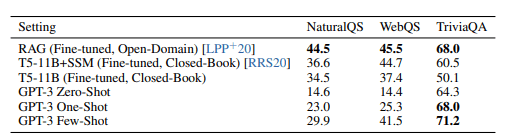
GPT-3 (Generative Pre-trained Transformer 3) is a state-of-the-art language model developed by OpenAI and released in 2020. It is the largest and most powerful of the GPT models, with a whopping 175 billion parameters, making it one of the largest deep learning models ever created.
GPT-3 was trained using a similar approach as its predecessors, where it was pre-trained on a massive corpus of text data using unsupervised learning. However, due to its size and the extensive training data used, GPT-3 has achieved breakthroughs in natural language processing and has set new standards for performance on various language tasks, including language translation, text completion, and question answering.
GPT-3 is capable of generating highly coherent and natural-sounding text that is often difficult to distinguish from text written by humans. Its capabilities have sparked excitement and interest in the AI community and beyond, with potential applications ranging from chatbots and virtual assistants to content creation and even computer programming.
However, like its predecessors, GPT-3 has also raised concerns about its potential misuse, particularly in the creation of fake news, propaganda, and other forms of disinformation. OpenAI has made efforts to mitigate these concerns by carefully controlling access to the model and releasing it only to trusted partners and researchers.
What is GPT 4?
GPT-4 was created to increase model “alignment,” or the capacity to carry out user goals, while simultaneously improving model veracity and producing output that is less obscene or hazardous.
Improvement in Performance
As one may anticipate, GPT-4 models outperform GPT-3.5 models in terms of the veracity of the responses. With GPT-4 scoring 40% higher than GPT-3.5 on OpenAI’s internal factual performance benchmark, the percentage of “hallucinations,” when the model commits factual or reasoning errors, is reduced.
Also, it enhances “steerability,” or the capacity to modify behavior in response to user demands. You may instruct it to write, for instance, in a different tone, style, or voice. Attempt prompts that begin, “You are a garrulous data expert,” or “You are a terse data expert,” and have it walk you through a data science idea. Further information on creating effective prompts for GPT models may be found here.
A further improvement is in the model’s adherence to guardrails. If you ask it to do something illegal or unsavory, it is better at refusing the request.
How to use Visual Input in GPT 4
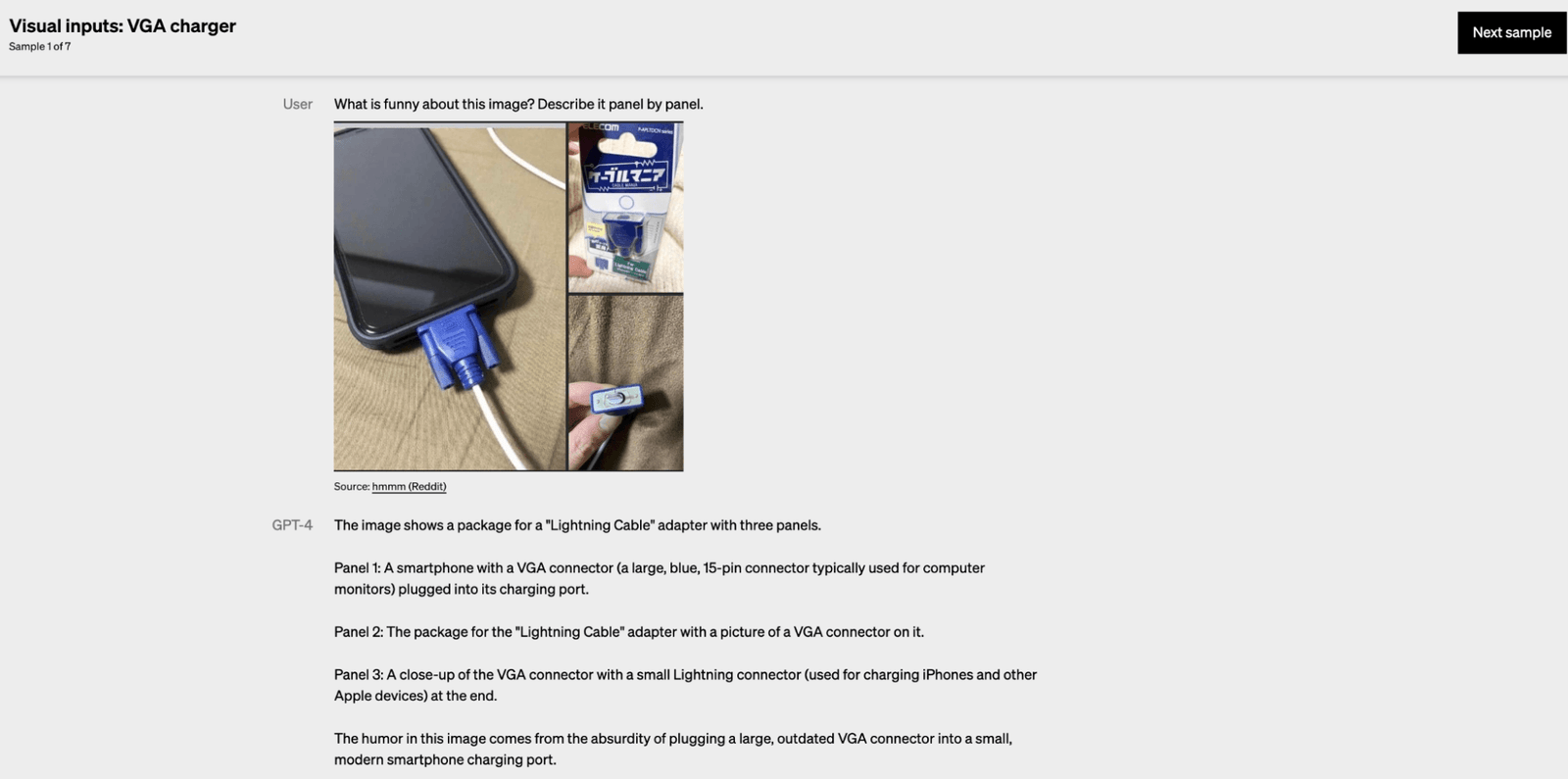
The ability to input text and images into GPT-4 is a significant development (research preview only; not yet available to the public). Users can enter any language or vision task by sprinkling text and images throughout the text.
In the examples, complicated images like charts, memes, and screenshots from academic publications are successfully interpreted by GPT-4.
These are some illustrations of the vision input.
What are GPT 4 Performance Benchmarks?
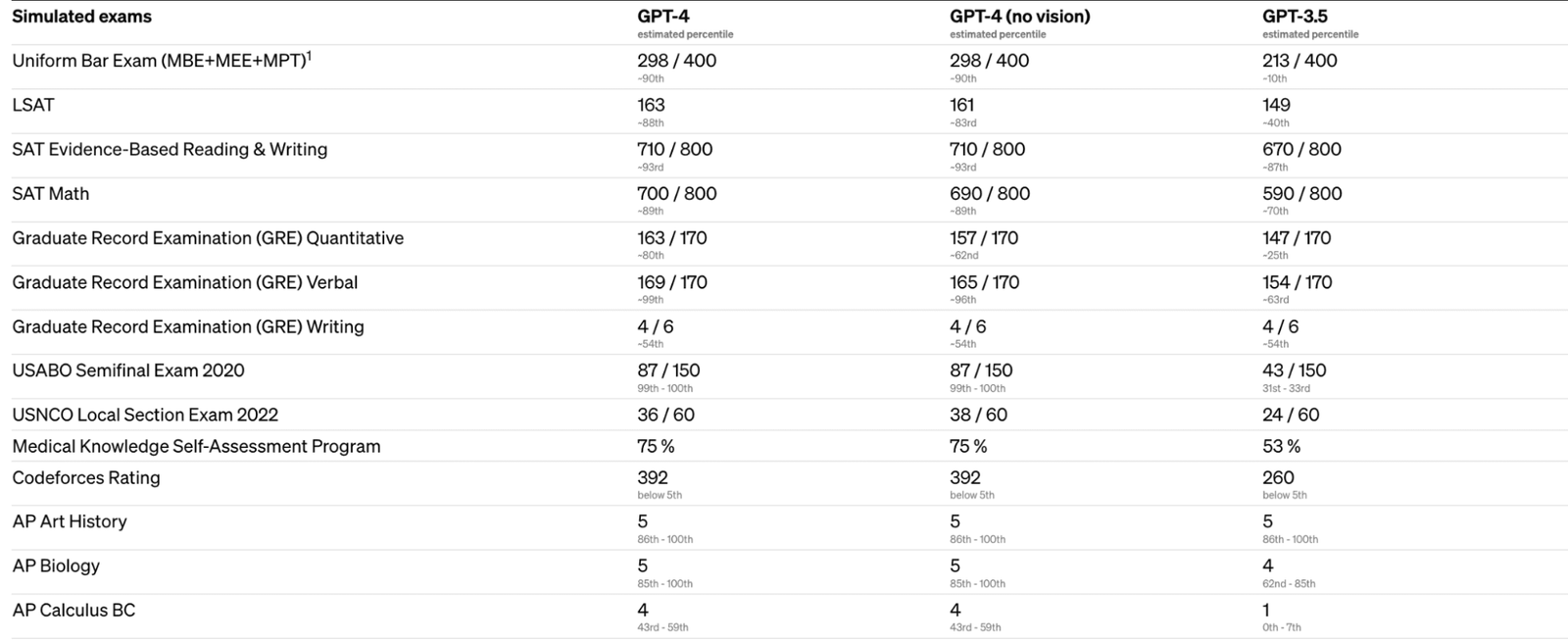
OpenAI assessed GPT-4 by mimicking tests made for humans, such as the SAT for college admission and the Uniform Bar Examination for lawyers. The outcomes demonstrated that GPT-4 performed at a human-level on a number of academic and professional standards.
FAQs
There are ways to use GPT 4’s text input functionality, though. Only those who pay to ChatGPT Plus, which gives users access to the language model for $20 per month, will have access to OpenAI’s text-input functionality.
Users can access ChatGPT powered by GPT 4 for $20/month by purchasing a ChatGPT Plus subscription, but they can access Bing AI Chat and use the new language model for free. Visit Live Mint to keep up with all the latest technology news.
GPT 4, OpenAI’s most sophisticated system, outperforms earlier iterations of the models in practically every comparison. Compared to GPT 3, it is more imaginative and coherent. Longer texts or even photos can be processed. It’s more accurate and less likely to make up “facts” when done this way.
Yes. Developers can create applications and services using the GPT 4 API and ChatGPT Plus. As we seek to create technologies that empower everyone, we’re eager to see how people use GPT 4.